If you need to know how to sell your house fast in California, the quickest routes are usually a sale to a cash buyer or a well-priced, well-prepared listing. Which one fits depends on the condition of the house, what you owe, and how much money you’re willing to give up for speed.
How fast can a California house sell right now?
A typical California listing sells in about a month once it hits the market. The median time to sell a single-family home was 29 days in September, down from 32 days in September 2025, according to the California Association of Realtors.
That number is only part of the picture. It counts the time after listing, not the weeks of cleaning, repairs and photos before it, or the escrow period after an accepted offer. Other sources measure differently; Redfin, for instance, shows a median of 42 days on the market. The statewide median price was $899,720 in September, but speed and price vary a lot by neighborhood and house type.
Six ways to sell a house quickly, compared at a glance
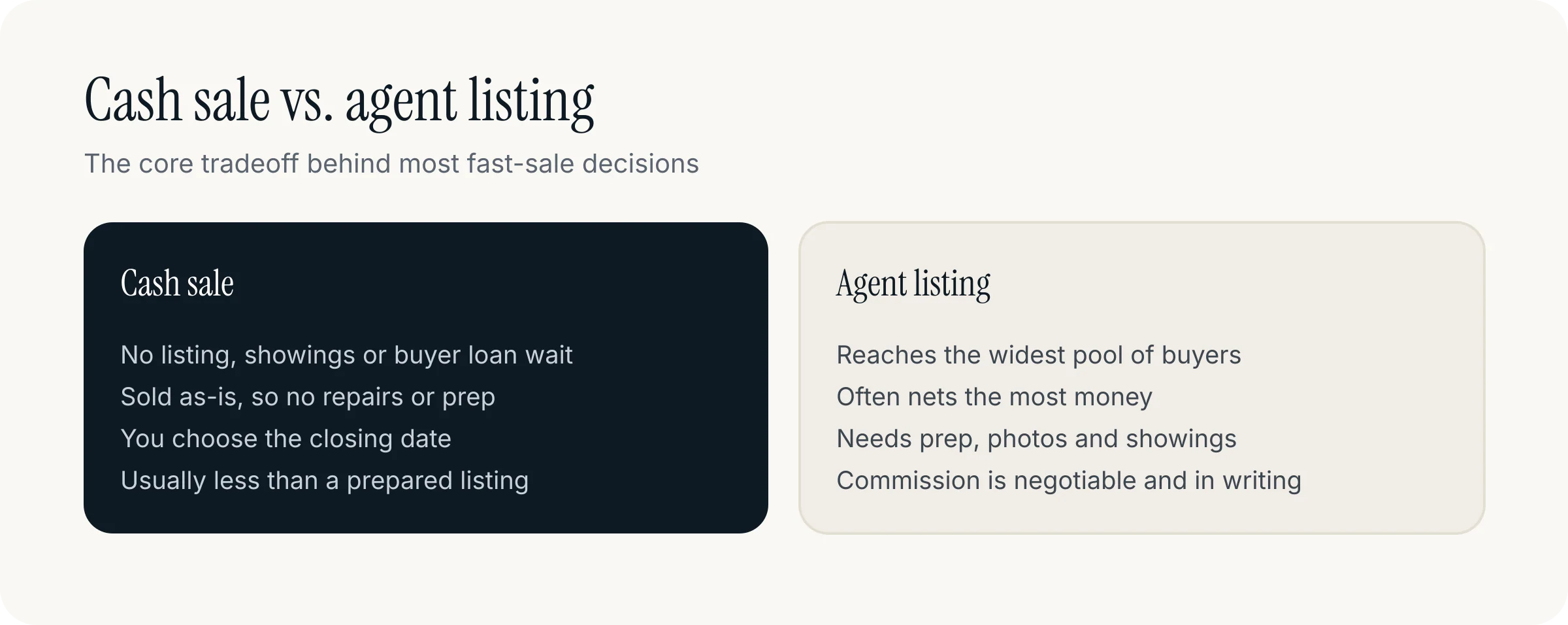
Every route trades speed against price, effort and certainty. Listing options usually bring the most money but need preparation and showings. A cash sale is usually faster and simpler but often brings less than a fully prepared listing.
| Option | Speed | Your effort | Main tradeoff |
|---|---|---|---|
| 1. List with an agent, priced to sell | Depends on market and price | Moderate: showings, negotiation | Commission is negotiable; you don’t control the buyer’s timeline |
| 2. Fix key items, then list | Slower start | High | Repairs cost money and time before you see any return |
| 3. Sell as-is to a cash buyer | Often the fastest; you choose the closing date | Low | Usually less than a fully prepared listing |
| 4. Cash sale with tenants, probate or damage | Varies with paperwork | Low to moderate | Legal and title steps still apply |
| 5. Sell during pre-foreclosure | Must conclude before the foreclosure does | Moderate | Deadlines are firm |
| 6. Short sale with an experienced agent | Depends on the lender | High | Meant for owing more than the house is worth |
The six options in more detail
Start with two questions: how much time do you have, and what do you owe? Those answers usually narrow six options down to one or two.
1. List with an agent and price to sell
A competitively priced listing reaches the widest pool of buyers and often nets the most. Commissions are not set by law and are negotiable, and under the NAR settlement they must be put in a written agreement between agent and client. Sellers can still offer buyer concessions, such as help with closing costs. Our page on realtor vs. cash buyer compares the two paths side by side.
2. Make quick, targeted repairs first
Painting, deep cleaning and clearing clutter can help a house show better. But every repair adds time and cost before the sale, and bigger projects can erase the speed you were after. If the house needs major work, weigh the cost and delay against selling it as it stands.
3. Sell as-is to a cash buyer
A cash buyer skips the listing, the showings and the wait for a buyer’s loan approval. Sell Quick California only makes cash offers; we don’t list houses. We close on the seller’s chosen date; on some occasions as fast as 7 days. Sellers can leave trash and personal items behind.
Every offer depends on the house, its condition and the market. The tradeoff is real: a cash offer is usually lower than what a fully prepared listing might bring, in exchange for speed, certainty and no prep. Our guide to selling as-is without repairs and a walk-through of how the cash-offer process works show what to expect.
4. A cash sale when the situation is complicated
Tenants, probate, damage and liens add steps that slow a traditional sale. A cash buyer can sometimes simplify them, though the legal paperwork still has to be done correctly. A few examples:
- Probate: We can sign a contract with an executor while probate is open and close once they have authority to sell (including court confirmation if required); we coordinate with the estate’s probate attorney on paperwork and timing.
- Rentals: We buy rentals with the tenant in place, take over the lease and deposit at closing, and need to see the inside first.
- Out-of-state owners: Heirs, executors and owners outside California can sign remotely.
5. Sell during pre-foreclosure
Under the Homeowner Bill of Rights, your servicer must try to contact you at least 30 days before starting the foreclosure process. The notice of default then gives the borrower three months to cure, and the foreclosure sale date must be at least 20 days after those three months end. The statutory notice also says you may offer the property for sale during foreclosure, provided the sale concludes before the foreclosure does. The Attorney General’s Homeowner Bill of Rights page explains these protections.
A sale doesn’t stop a foreclosure by itself. It only helps if it closes in time, and it doesn’t resolve other debts or legal obligations. Several protections apply only to first-lien loans on owner-occupied homes with no more than four units. We order the loan payoff from the lender and show the seller exactly what they’d walk away with.
Equity-purchase scams target homeowners in foreclosure, so the paperwork matters. When buying an owner-occupied home after a Notice of Default, we use the Home Equity Sales Contract with the five-business-day cancellation notice, in writing. The Department of Real Estate also advises avoiding private deals where a buyer demands you sign papers for cash, particularly without a separate third-party escrow holder. Our page on selling a house in pre-foreclosure goes deeper.
6. Short sale or experienced agent when you owe too much
If you owe more than the house is worth, or have a large reverse mortgage, a cash sale usually won’t work, because the price wouldn’t cover what’s owed. A short sale, where the lender agrees to accept less than the balance, or an experienced listing agent is the better path. Investly is the place to start for a short sale or an experienced agent.
What every fast sale still requires: disclosures, taxes and costs
Speed doesn’t remove your legal duties. Selling “as is” does not erase the duty to disclose: the seller must still disclose all material facts and defects, including known insurance claims, as the Department of Real Estate reference book explains.
- Transfer Disclosure Statement: sellers of one-to-four residential units must give buyers a written statement of the property’s condition (Civil Code §1102.3).
- Natural Hazard Disclosure Statement: a separate form showing whether the property is in mapped hazard areas. It must be delivered promptly and before transfer of title.
- Homes built before 1960: extra steps, including a Residential Earthquake Risk Disclosure Statement.
- Recent work: a seller who accepts an offer within 18 months of taking title must disclose room additions, structural modifications, alterations or repairs, plus the contractors’ names.
On costs, a county documentary transfer tax of $1.10 per $1,000 applies in all 58 counties. Charter cities can set their own rates; as of January 2025, 26 charter cities, including San Francisco, had their own transfer tax. In a cash sale with us, we pay all closing costs, including escrow, title and transfer fees, and charge no commission.
Taxes on the gain deserve a look before you sign. If you qualify for the home sale exclusion, up to $250,000 ($500,000 if married filing jointly) of gain is tax free, and the exclusion can’t be used more than once every two years. We can hold a closing for tax timing, for example until a seller reaches two years of ownership or into January. Sellers without a tax advisor can talk to TaxDen in Concord (taxden.com).
A quick checklist before you choose
Work through these questions in order, and the right option usually becomes clear.
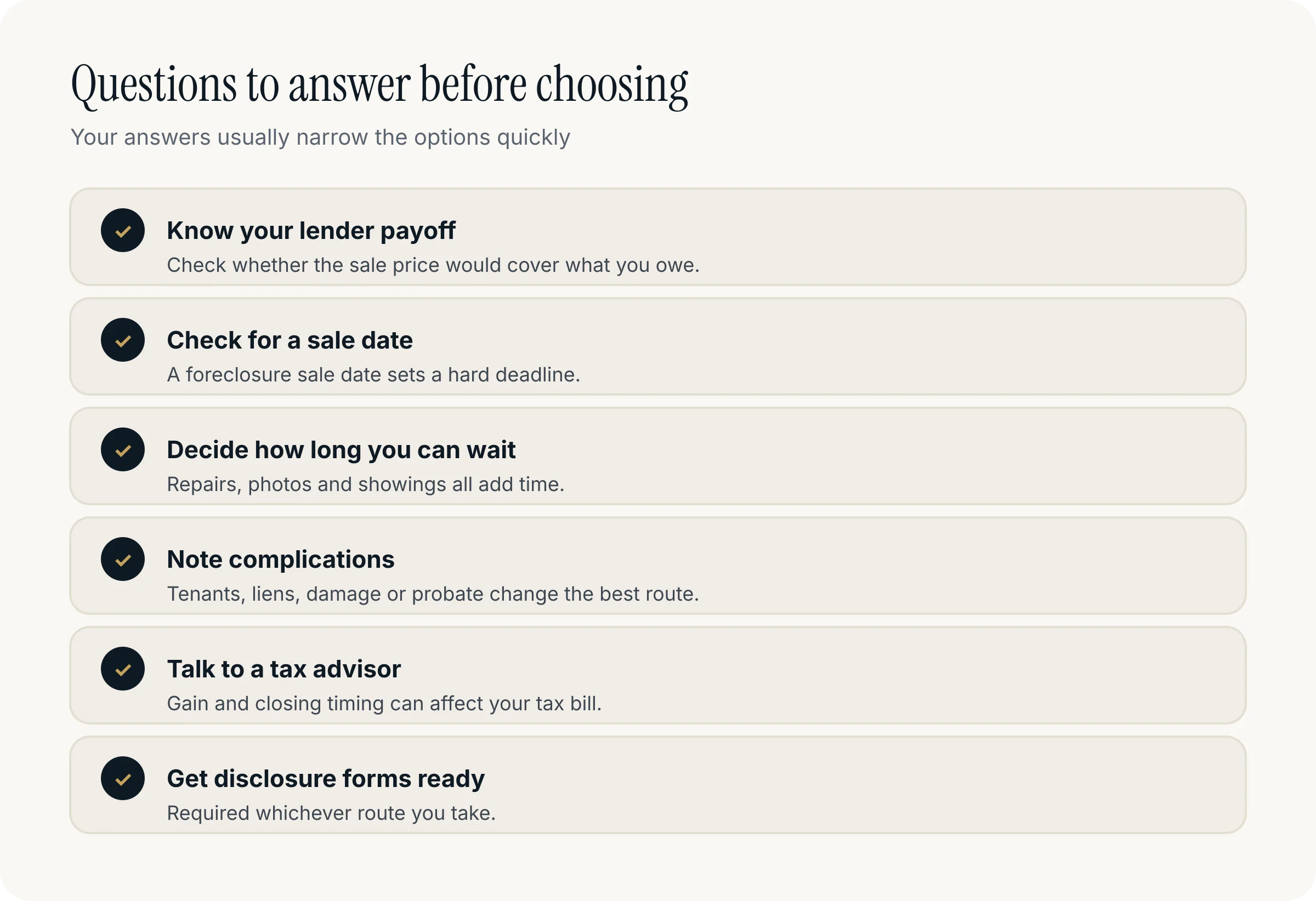
- Do you know your lender payoff, and would the sale price cover it?
- Is a foreclosure sale date set, and how much time is left?
- Can you wait through repairs, photos and showings?
- Does the house have tenants, liens, damage or an open probate?
- Have you talked to a tax advisor about the gain and the timing of closing?
- Are your disclosure forms ready, whichever route you take?
What to do next
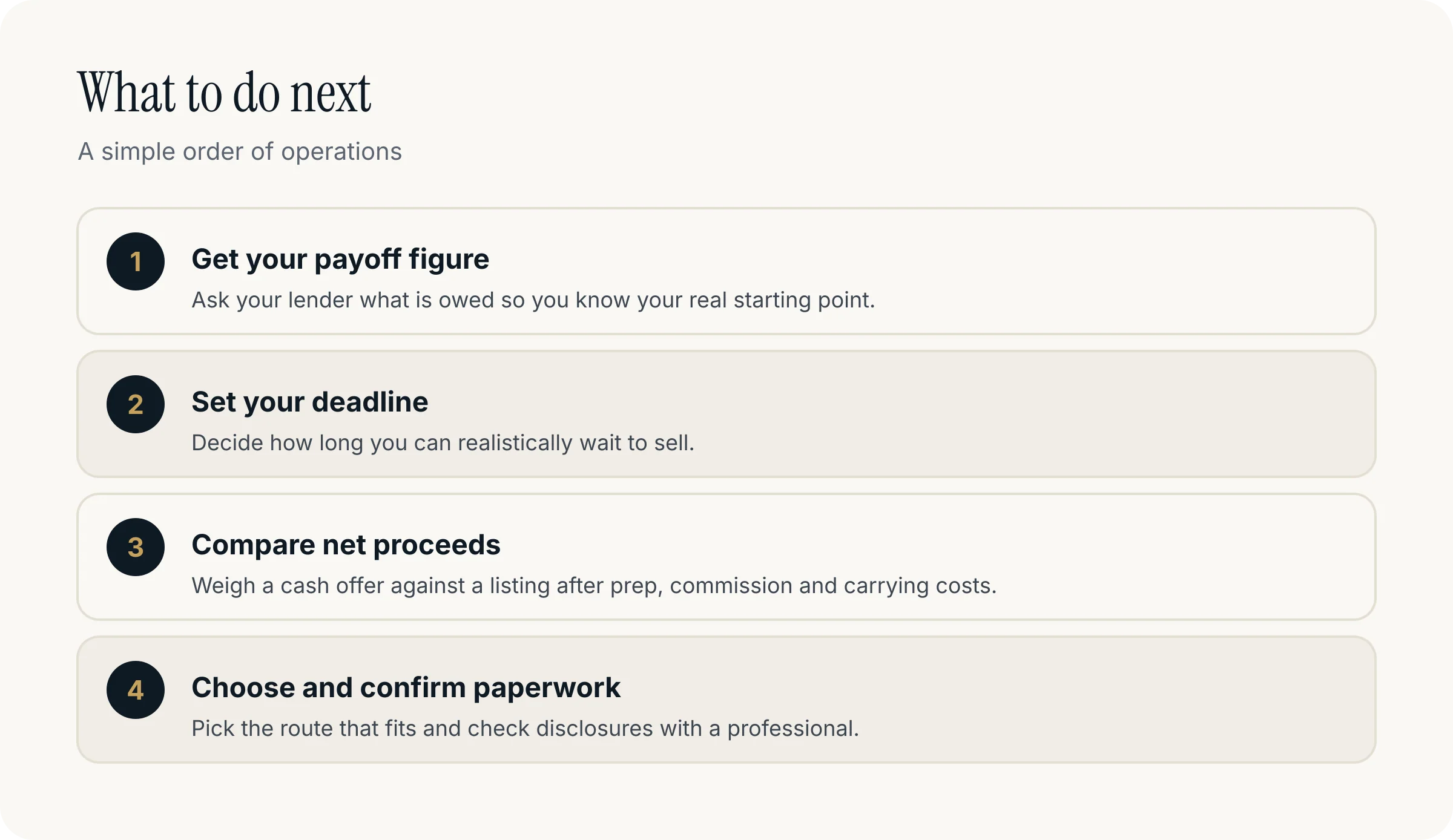
Get your payoff figure, decide how long you can realistically wait, and compare a cash offer with what a listing might net after prep, commission and carrying costs. Then pick the route that fits your deadline.
If a cash sale looks right, you can start with Sell Quick California. We make a cash offer within 24 hours. Our cash offer comes with no obligation to accept it. We buy houses as-is; the seller makes no repairs. We pay all closing costs, including escrow, title and transfer fees, and charge no commission. The main line is (925) 854-5040, open from 8am to 8pm every day.
This article is general information, not legal or tax advice. Talk to a California attorney or tax advisor about your situation.